With so much of life happening online, low bandwidth has become the modern power outage. Whether you are catching up on the latest Netflix craze, doom-scrolling through TikTok, or hosting a high-stakes business meeting on Zoom, your internet speed is the invisible engine driving the experience.
Internet service providers (ISPs) love to market “Gigabit” speeds and “Hyper-fast” connections, often implying that anything less will leave you staring at a buffering wheel. But do you actually need a 1000 Mbps connection to enjoy a smooth digital life?
The short answer is: Probably not. The long answer involves understanding the difference between what your apps need and what your household consumes. Let’s break down the actual requirements for the most common online activities to help you decide if you’re overpaying for speed you don’t use.
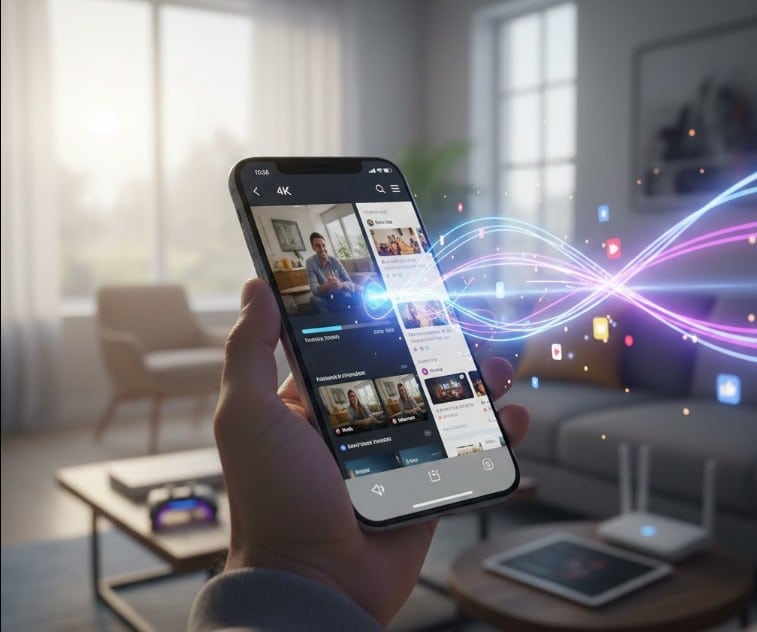
The Reality of Streaming: From HD to 4K
Streaming video is the heaviest lifter in most households. It accounts for a massive portion of global internet traffic. However, video compression technology has become incredibly efficient, meaning you need less speed than you might think.
Standard Definition (SD) and High Definition (HD)
If you are watching on a smaller screen or an older television, 3 to 5 Mbps is generally enough for a stable HD (1080p) stream. Most platforms, including YouTube and Netflix, are designed to scale their quality based on your connection, so you might not even notice a dip unless your speed drops below this threshold.
4K Ultra HD
This is where the numbers jump. To stream in 4K, Netflix recommends a steady connection of 15 to 25 Mbps. While that sounds manageable, remember that this is for one stream. if three people in the house are watching 4K content simultaneously, you’ll need a minimum of 75 Mbps just for the TV screens.
Live Sports and Gaming Streams
Platforms like Twitch or live sports broadcasts often use higher frame rates (60fps). This requires a bit more overhead than a standard movie—expect to need about 10-15 Mbps for a stutter-free live experience.
Social Media: It’s Not Just About Downloading
Social media has evolved from text-based updates to a video-first landscape. Apps like Instagram, TikTok, and Snapchat are essentially continuous video streams, which changes the bandwidth math.
Scrolling and Browsing
For basic scrolling, a speed of 5-10 Mbps is perfectly adequate. This allows images to load instantly and videos to autoplay without a hitch. However, social media isn’t just a “passive” activity for many users.
Content Creation and Engagement
If you are an influencer or a business, your requirements change. You aren’t just downloading content; you are uploading it. This is where “Upload Speed” (which is usually much lower than download speed on many connections) becomes critical.
To maintain a strong digital presence, many users turn to services like SuperViral to boost their engagement and visibility. When you are managing a growing brand or a high-traffic profile, you need a connection that can handle frequent high-resolution uploads of Reels and Stories without timing out.
For consistent uploading of high-quality video content, an upload speed of at least 10 Mbps is recommended to ensure your files reach the server quickly and without corruption.
The Hidden Factors: Why “Fast” Sometimes Feels “Slow”
If the requirements for 4K streaming are only 25 Mbps, why do people with 100 Mbps connections still experience lag? The “advertised speed” is rarely the “actual speed” reaching your device.
- The Wi-Fi Tax: Unless you are plugged in via an Ethernet cable, you are losing speed. Walls, distance from the router, and interference from other electronics can slash your 100 Mbps connection down to 30 Mbps by the time it reaches your bedroom.
- Household Multipliers: This is the most common pitfall. You have to sum up the needs of every connected device.
- Smart Fridge: 1 Mbps
- Phone in pocket (checking updates): 2 Mbps
- Laptop (background sync): 5 Mbps
- Gaming Console (downloading a patch): 50 Mbps
- Latency (Ping): For social media and streaming, latency doesn’t matter much. But for video calls or gaming, “lag” is caused by how long it takes a signal to travel, not just how much data can fit through the pipe.
Identifying Your “Sweet Spot”
To find the right plan for your home or office in Denmark, consider this breakdown of “Total Household Speed”:
| User Type | Activities | Recommended Speed |
| The Solo Resident | Social media, HD streaming, browsing. | 25 – 50 Mbps |
| The Power Couple | Two 4K streams, home office, heavy social media. | 100 – 200 Mbps |
| The Modern Family | Gaming, multiple 4K streams, smart home devices. | 300 – 500 Mbps |
| The Content Creator | High-res video uploads, live streaming, cloud backups. | 500+ Mbps (Focus on Upload) |
How to Optimize Your Current Speed
Before you call your ISP to upgrade to a more expensive plan, try these steps to ensure you are getting the most out of what you already pay for:
- Update Your Router: If your router is more than three years old, it might not be able to handle modern wireless standards (like Wi-Fi 6), acting as a bottleneck for your fast fiber connection.
- Use 5GHz Frequency: Most modern routers offer 2.4GHz and 5GHz bands. The 5GHz band is much faster for streaming and social media, though it has a shorter range.
- Clear Background Apps: On computers and smartphones, background sync (like Dropbox or Google Photos) can “hog” your bandwidth, making your TikTok feed feel sluggish.
Conclusion: Don’t Buy the Hype, Buy the Need
While a 1000 Mbps connection is impressive, it is overkill for the vast majority of Danish households. If your primary goal is to enjoy seamless social media browsing and high-quality streaming, a stable 100 to 300 Mbps connection is usually the “Goldilocks” zone—just right.
By understanding your actual data needs, you can save money on your monthly bill without sacrificing a single frame of your favorite show or a second of your social media engagement.